What Your Homeowners Policy Doesn't Cover
Floods, sewer backups, slow leaks, mold, termites and that diamond ring all sit outside a standard policy. Here's each gap, and how to close the ones that matter for your house.
Rooftop Daily editors choose every topic independently. Some guides include labeled partner offers, and we may be paid when you request a quote. How we make money
In this guide
Nobody reads the exclusions page of their homeowners policy until they need to. By then, the answer is already decided. Most of the big gaps are the same from company to company, though, and almost all of them can be closed for a modest price before anything goes wrong.
The short answer
A standard homeowners policy (the HO-3 most people have) doesn’t cover flooding, sewer or drain backups, slow leaks and seepage, mold and rot from maintenance problems, termites and other pests, earthquakes, sinkholes or landslides. It also caps what it pays for jewelry and other valuables. Flood and earthquake need separate coverage; sewer backup, valuables and code upgrades can usually be added to your policy as endorsements. Maintenance problems can’t be insured at all.
A common surprise: during a storm the sewer line backs up, and a few inches of water spread across a finished basement. The homeowner assumes it’s a water damage claim like any other. The policy has no water backup endorsement, so the claim is denied, and the add-on that would have covered it was never added at renewal.
Water: it depends where it came from
Water causes more confusion than any other part of a policy, because the same wet carpet can be covered or not depending on the source.
| Where the water came from | Standard policy? | How to cover it |
|---|---|---|
| A pipe or appliance line that suddenly bursts | Generally covered | Already in an HO-3 |
| A slow leak or seepage through the foundation | Not covered; treated as maintenance | Fix the source; waterproof the basement |
| A sewer or floor drain backing up | Not covered | Water backup endorsement |
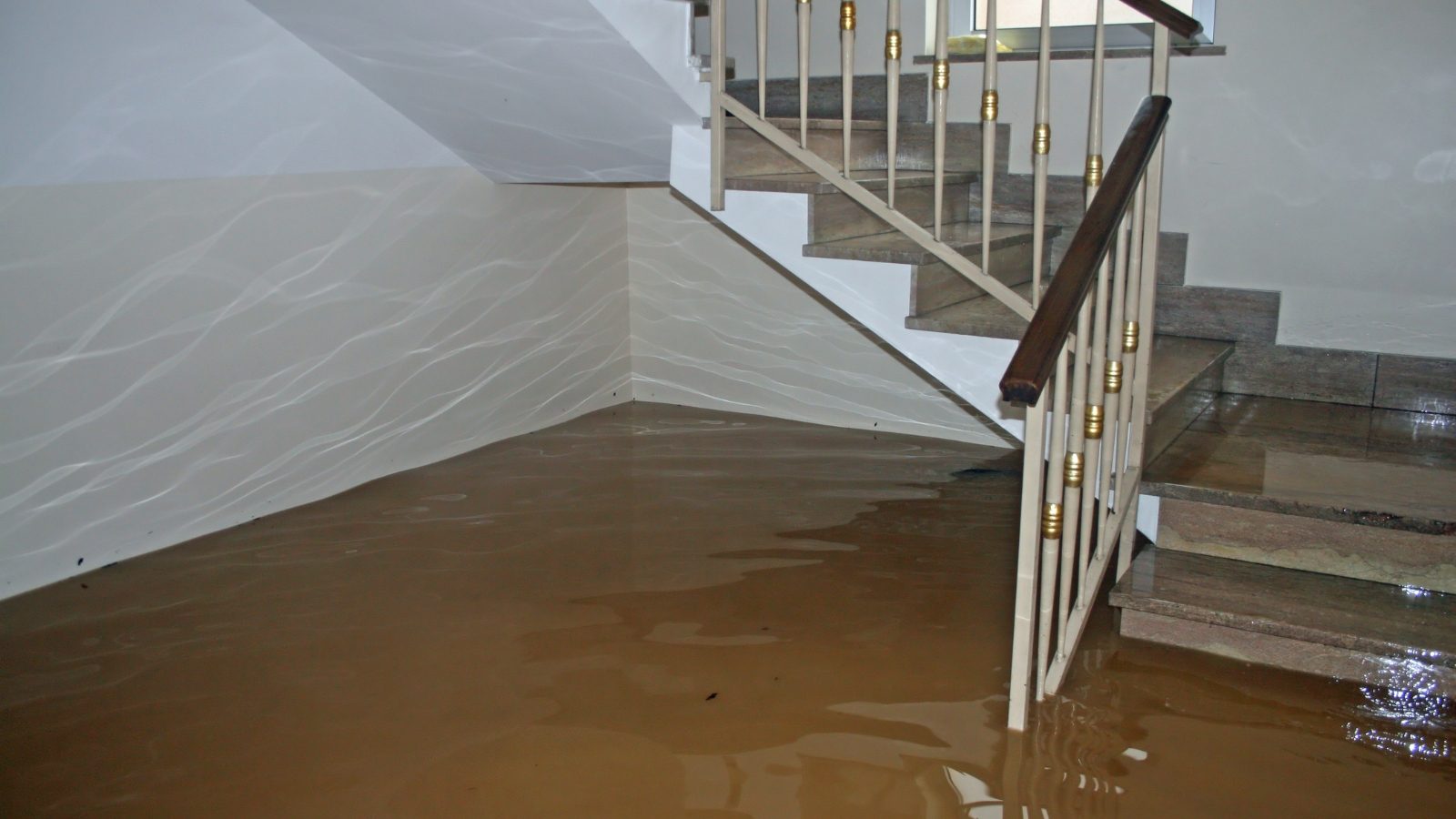
| Rising water from outside (heavy rain, a river, storm surge) | Not covered | A separate flood policy |
The Insurance Information Institute (Triple-I) says an HO-3 covers accidental discharge of water from a plumbing system, but excludes seepage, which it calls a maintenance issue. Sewer backups aren’t covered by a typical homeowners policy, nor by flood insurance. The fix is an endorsement on your homeowners policy, which the Triple-I describes as usually inexpensive.
If your basement is finished, or you’ve ever had water near a floor drain, the backup endorsement is usually the first gap to close. Our guide to frozen pipes covers what to do the night a pipe bursts.
Flood: the gap that surprises people outside flood zones
The NAIC, the national organization of state insurance regulators, is blunt: rain, runoff and snowmelt that floods a house from outside isn’t covered by a homeowners policy. You need a separate flood policy, from the National Flood Insurance Program or a private insurer.
Two facts change how people think about it. FEMA says about one-third of NFIP claims from 2013 to 2023 came from outside current high-risk flood zones, and the average NFIP claim paid from 2019 to 2023 was $52,000. And an NFIP policy generally takes 30 days to start, so you can’t buy it when the forecast turns. NFIP policies cover up to $250,000 for the building and $100,000 for contents.
Advertisement
Earthquakes, sinkholes and landslides
The Triple-I lists earthquake, landslide, mudslide and sinkhole among the perils an HO-3 excludes. Earthquake coverage is available as an endorsement or a separate policy, usually with a deductible that’s a percentage of your coverage rather than a flat amount: 5% on $300,000 of coverage is $15,000. Whether it’s worth it depends almost entirely on where you live.
Mold, pests and plain wear and tear
These are the exclusions you can’t buy your way out of, because insurers see them as maintenance. The NAIC says damage from termites, rats or other infestations is typically not covered, and policies often exclude mold. The Triple-I adds one important exception: if mold results directly from a covered event, like a burst pipe, removing it may be covered.
The protection here is upkeep. The Triple-I suggests keeping indoor humidity between 30% and 60%, running bath and kitchen exhaust fans, replacing appliance water hoses about every five years, keeping the roof and gutters in shape, and drying anything soaked within 24 to 48 hours. Our fall-to-winter checklist covers the seasonal part.
This weekend
Look behind the washing machine and under the kitchen sink this weekend. If the supply hoses are rubber and you don’t know how old they are, replace them with braided stainless steel. It’s a ten-minute job and one of the most common sources of a “sudden” leak that started as a slow one.
Valuables, home businesses and pets
- Jewelry and other valuables. The Triple-I says a standard policy typically pays only $1,000 to $2,000 for stolen jewelry. The NAIC suggests a scheduled personal property endorsement (often called a floater) for specific pieces, art and heirlooms.
- A business at home. Business inventory and equipment kept at home likely isn’t covered. Tell your insurer about the business and ask what coverage you need.
- Dogs. Some policies exclude liability for certain dog breeds or exotic pets, according to the NAIC. If you have one, ask.
- Pools and detached buildings may need added coverage.
Rebuilding to code
If a fire or storm badly damages an older house, local building codes may require upgrades when you rebuild: new wiring, a different foundation, more insulation. The Triple-I says an HO-3 excludes those extra costs unless you add an ordinance or law endorsement. In an older home, it’s worth asking about.
The NAIC adds one more add-on it calls usually the most important: replacement-cost coverage on the roof, so a roof claim isn’t reduced for age. More on that in why your home insurance went up.
Where a home warranty fits
None of this covers a furnace, water heater or dishwasher that simply wears out. Insurance pays for sudden damage, not old age. That’s the gap a home warranty is sold to fill, with its own fine print. We cover whether it’s worth it in is a home warranty worth it?
Your next step
Find your declarations page and look for three things: a water backup endorsement, the limit on jewelry and valuables, and whether your roof is covered at replacement cost. Then check FEMA’s flood map for your address. If any of those surprise you, call your agent before the next storm, not after.
Advertisement
Questions readers ask
Does homeowners insurance cover water damage?
It depends on the source. A standard HO-3 policy covers sudden, accidental water from your plumbing, like a burst pipe. It doesn't cover slow seepage, which insurers treat as maintenance, flooding from outside, or a sewer backup unless you add that coverage.
Do I need flood insurance if I'm not in a flood zone?
Maybe. FEMA says about a third of National Flood Insurance Program claims from 2013 to 2023 came from outside high-risk flood zones. Standard homeowners policies don't cover flood, and an NFIP policy usually takes 30 days to start.
Is sewer backup covered by homeowners insurance?
Not under a typical policy, and not by flood insurance either, according to the Insurance Information Institute. You can usually add it as an endorsement.
Does homeowners insurance cover mold?
Generally not, because insurers treat it as a maintenance problem. If mold results directly from a covered event, like a burst pipe, the cleanup may be covered.