How to Lower Your Electric Bill Without Living in the Dark
Heating and cooling are the biggest lever, and the cheapest fixes come first. Here are the changes worth making, ranked roughly by cost, with what the Department of Energy and ENERGY STAR say each one saves.
Rooftop Daily editors choose every topic independently. Some guides include labeled partner offers, and we may be paid when you request a quote. How we make money
In this guide
Most advice about cutting your electric bill is a list of 50 tips of wildly different value, with “unplug your phone charger” sitting next to “replace your furnace.” This one is ordered differently: the biggest and cheapest levers first, with the number each source puts on it, so you can stop reading when you’ve done enough.
The short answer
Start with heating and cooling, which ENERGY STAR says make up almost half of a typical home’s energy bill. Set the thermostat back 7°F to 10°F for 8 hours a day (the DOE says that can save as much as 10% a year on heating and cooling), keep the AC filter clean, and use ceiling fans so you can set the AC higher. Then lower the water heater to 120°F, switch to LEDs and use an advanced power strip for your TV and computer setup. Bigger upgrades, like sealing ducts, new windows or a heat pump, come after the cheap fixes.
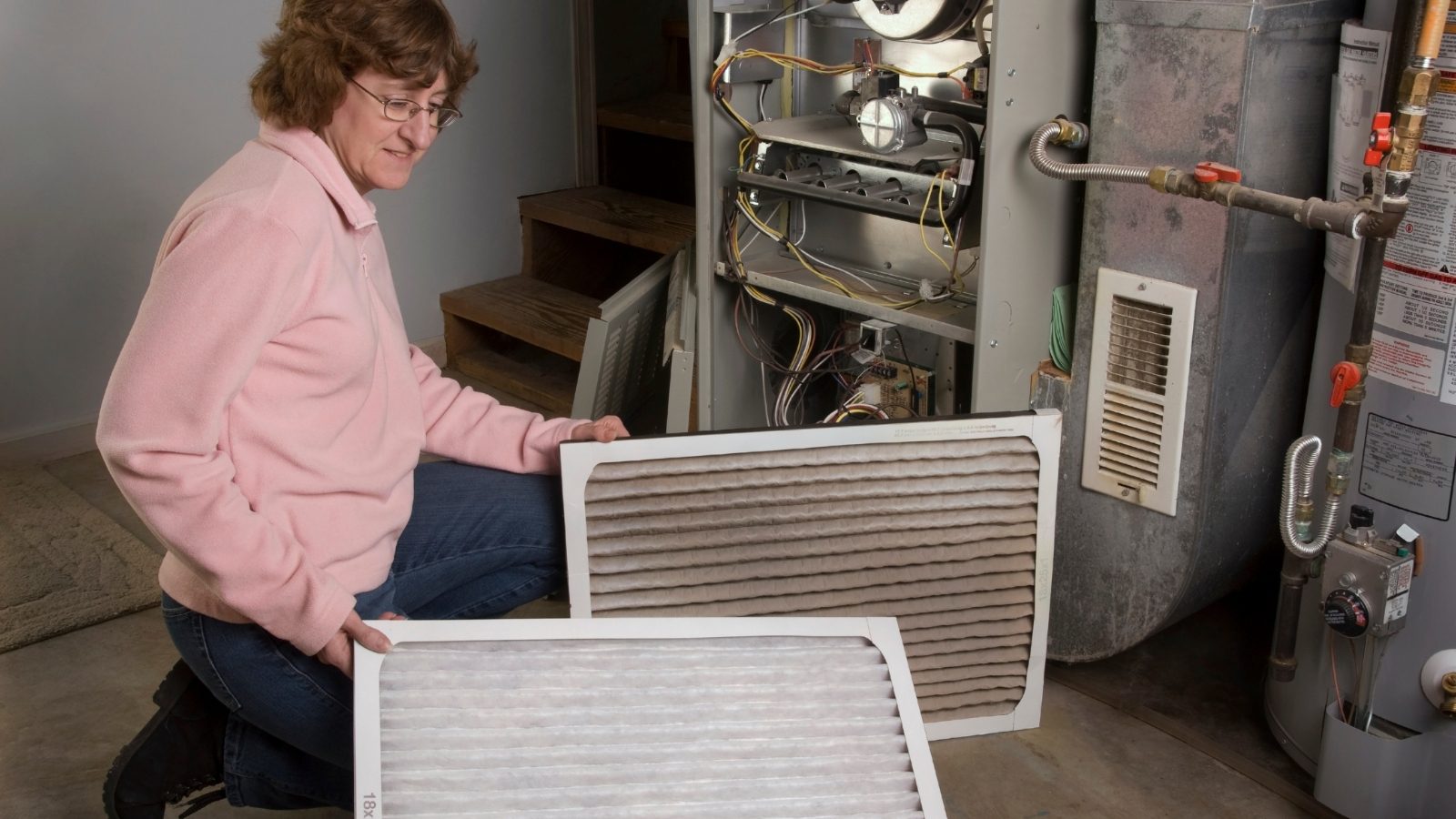
Take a household whose bill jumps every July. Before pricing new windows, they check the AC filter and find it gray and matted, program the thermostat to rise while everyone is out during the day, and start running the ceiling fans in the rooms they use. None of it costs much. The next summer’s bills are the real test of whether anything bigger is needed.
Where the money goes
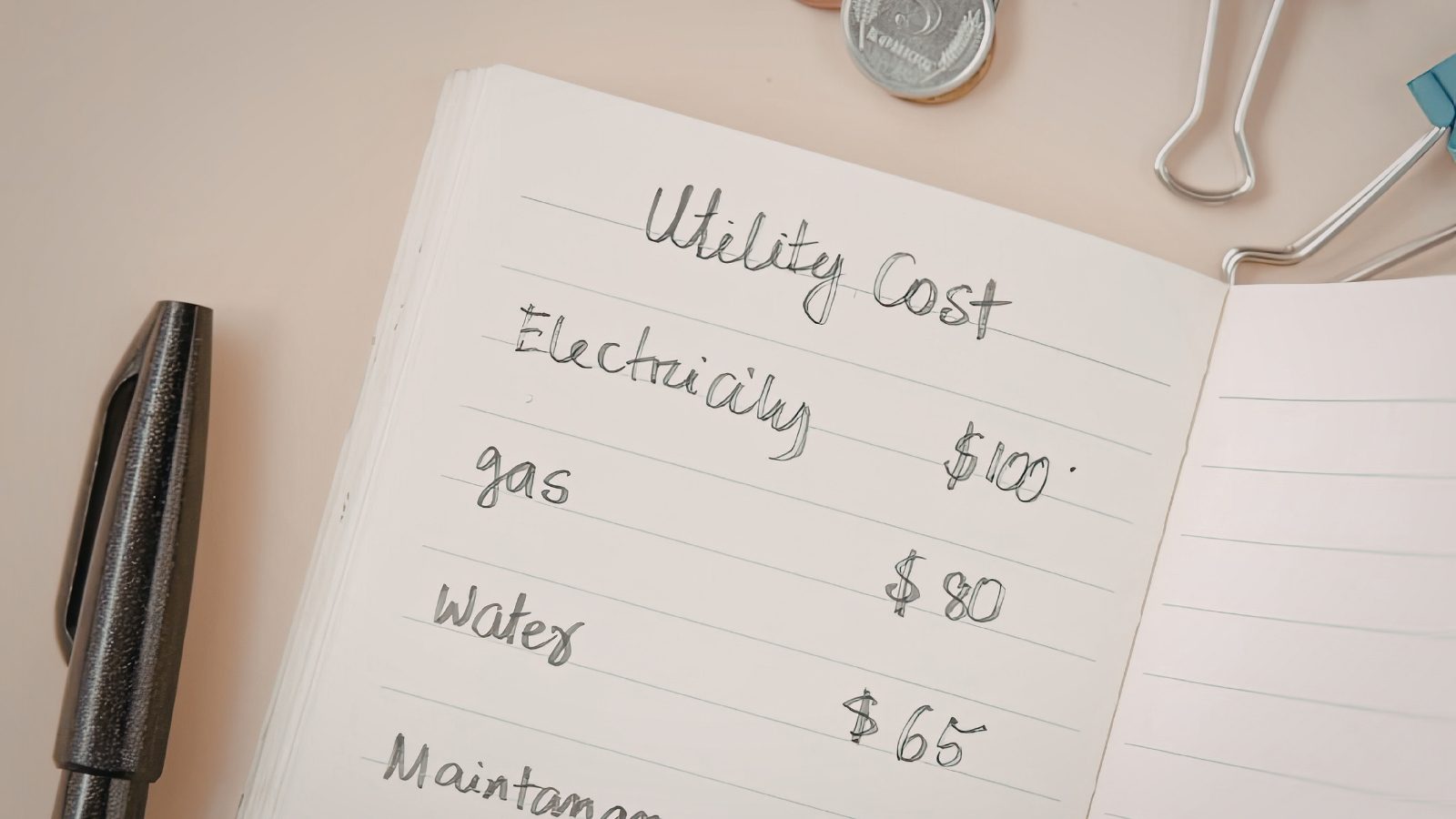
ENERGY STAR estimates a typical household spends around $1,900 a year on energy, and that almost half of it goes to heating and cooling. That’s why the first several steps below are all about heating and cooling. If you heat with gas, some of that cost is on your gas bill rather than your electric bill, but the same steps lower both.
Free: change how you use what you have
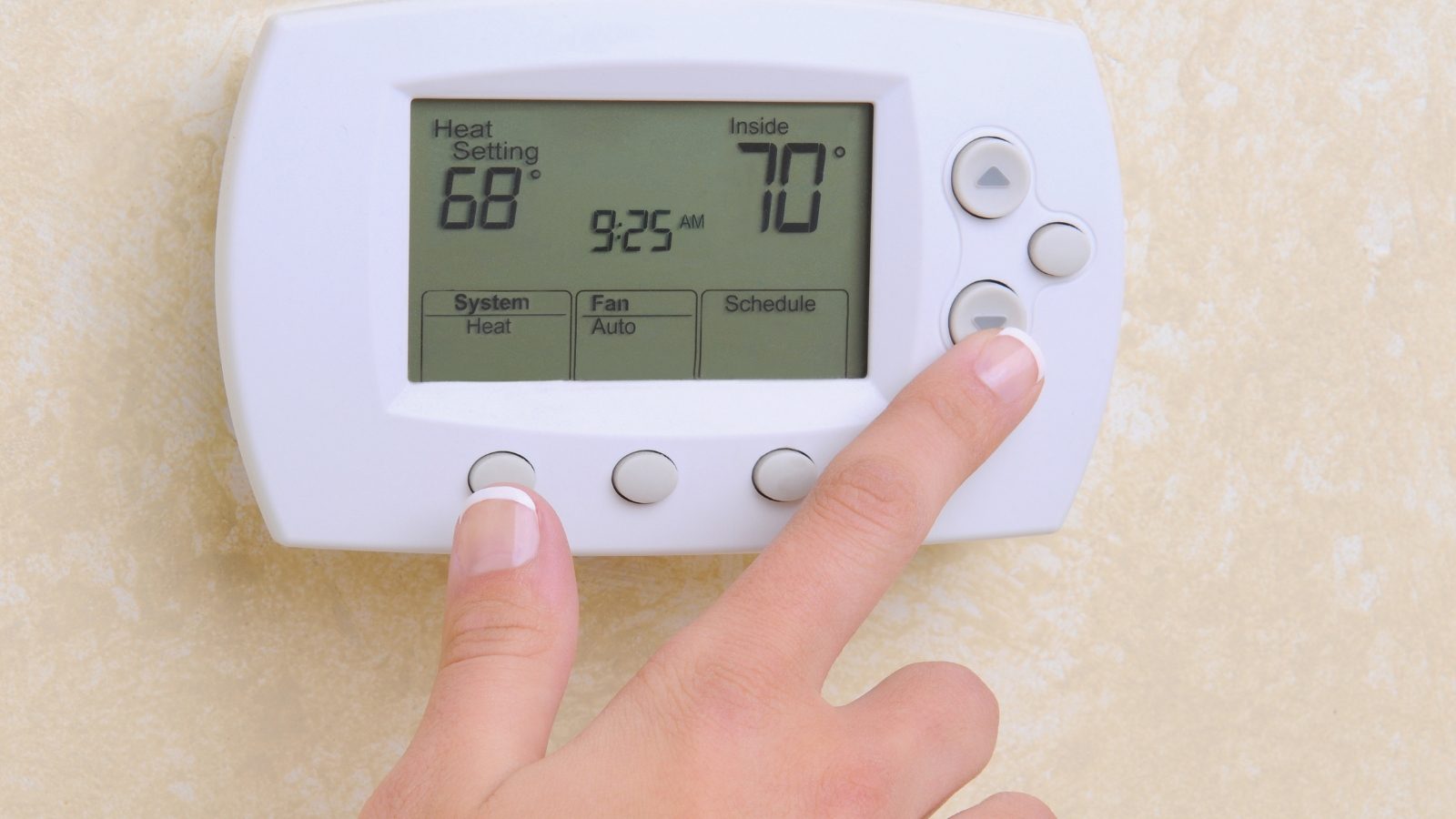
Set the thermostat back. The Department of Energy says you can save as much as 10% a year on heating and cooling by turning the thermostat back 7°F to 10°F from its normal setting for 8 hours a day: at night, or while everyone’s at work. In winter, it suggests around 68°F to 70°F while you’re awake, lower while you’re asleep or away. In summer, it suggests a setting as high as is comfortable. A programmable or smart thermostat does this for you.
Use ceiling fans in summer. The DOE says a ceiling fan lets you raise the thermostat setting about 4°F with no reduction in comfort. The DOE also says to turn them off when you leave the room.
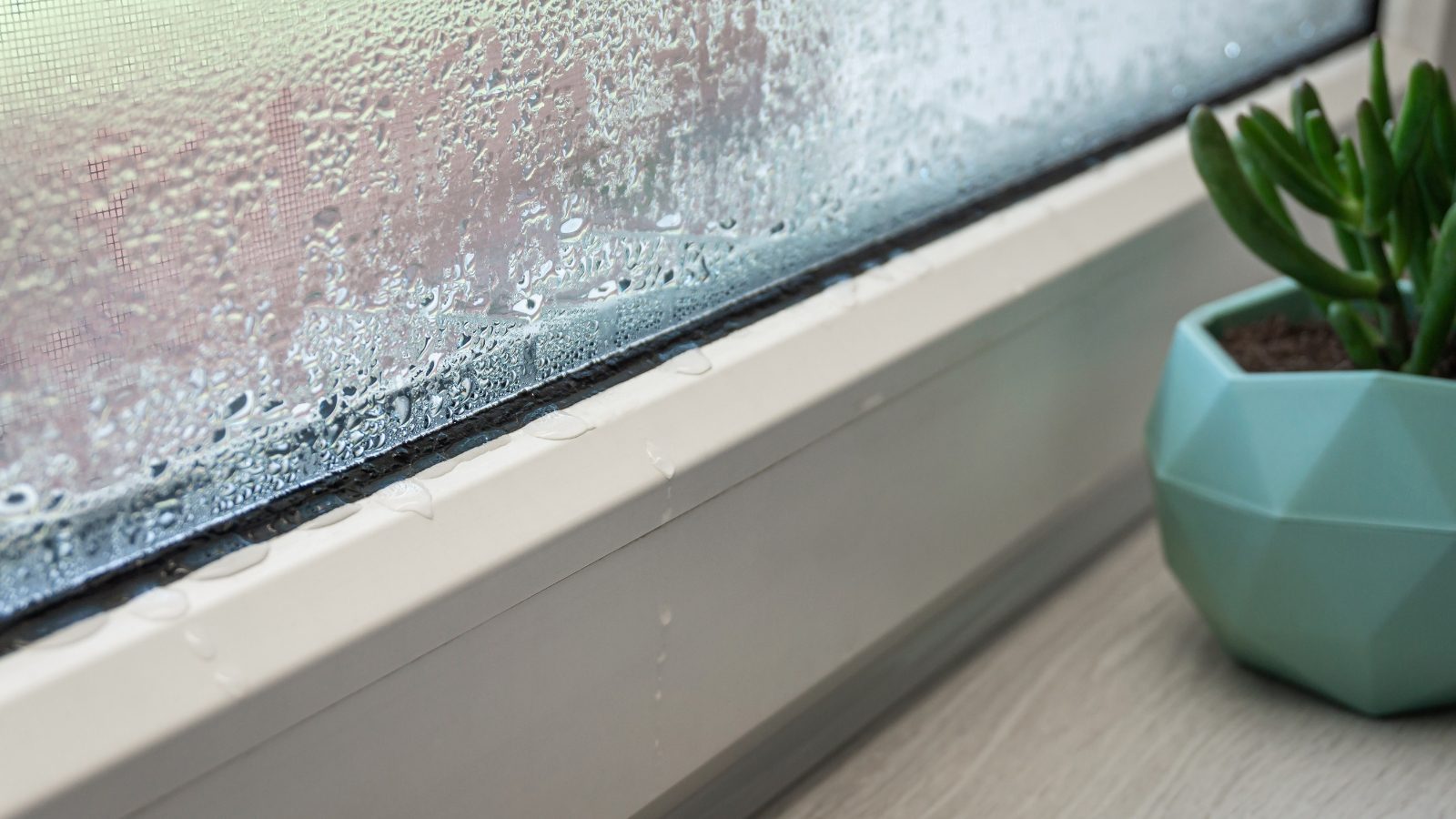
Close blinds on hot afternoons and open them on sunny winter days. Our drafty windows guide covers why windows matter so much for comfort.
Ask your utility about time-of-use or off-peak plans. The DOE notes that some utilities offer lower prices for off-peak electricity. If you can run the dishwasher, laundry or an EV charger at night, it may pay.
Advertisement
Under $50: the quick fixes
Change the AC and furnace filter. The DOE says replacing a dirty, clogged filter can lower an air conditioner’s energy use by 5% to 15%.
Turn the water heater down to 120°F. The DOE and ENERGY STAR say most households only need 120°F, and estimate savings of 4% to 22% a year from turning it down. Check your manual first. If your heater is electric, this one’s all on the electric bill.
Switch to LEDs. The DOE says LEDs use up to 90% less energy and last up to 25 times longer than incandescent bulbs, and that the average household saves about $225 a year by switching.
Use an advanced power strip for the TV, game console and computer, which shuts off power to devices that sit in standby. The DOE says one can cut electricity use and save up to $100 a year.
A few hundred dollars: tune-ups and sealing
Get the AC or heat pump tuned up in spring. A technician checks refrigerant, cleans coils and clears the drain, all things that affect efficiency. See our guide to an AC that isn’t blowing cold air for what to check yourself first.
Seal the ducts. ENERGY STAR says that in a typical house, about 20% to 30% of the air moving through the ducts is lost to leaks, holes and poor connections. If your ducts run through an attic, crawlspace or garage, that’s air you paid to heat or cool going outside. Many HVAC contractors seal ducts; ENERGY STAR says to use mastic or metal tape, never duct tape.
Air seal and weatherstrip. Caulk and weatherstripping around windows and doors are some of the cheapest comfort fixes in a house.
Ask your utility about an energy audit. Some utilities offer home energy audits at low or no cost. An auditor can find where your house is actually losing energy, so you spend on the right fix.
Thousands: the big upgrades
These can lower bills a lot, but they’re expensive, so they make the most sense when the old equipment is near the end of its life anyway.
- A heat pump, especially if you heat with electric baseboard, propane or oil. See heat pump vs. furnace.
- New windows, when your windows are failing. Our windows guide is honest that energy savings alone pay back slowly.
- A heat pump water heater, when your water heater needs replacing. See water heater leaking for costs.
The federal tax credits that used to help with these applied to equipment placed in service through 2025, according to the IRS. Check your state and your utility for rebates before you buy. For financing a big upgrade, see how to pay for a big home repair.
Your next step
Pull out your last 12 months of bills and find your most expensive month. If it’s a summer month, start with the AC filter, fans and thermostat. If it’s winter, start with the thermostat setback and sealing drafts. Do the free and cheap steps for a full season, then compare. For the full picture of what your house costs to run, see what owning a home really costs.
Advertisement
Questions readers ask
What uses the most electricity in a house?
For most homes, heating and cooling. ENERGY STAR says a typical household spends around $1,900 a year on energy, and almost half of that goes to heating and cooling. Water heating, appliances, electronics and lighting make up most of the rest.
How much can I save by adjusting the thermostat?
The Department of Energy says you can save as much as 10% a year on heating and cooling by turning the thermostat back 7°F to 10°F for 8 hours a day from its normal setting, such as while you sleep or are at work.
Do LED bulbs really save money?
Yes. The Department of Energy says LEDs use up to 90% less energy and last up to 25 times longer than incandescent bulbs, and that the average household saves about $225 a year by using LED lighting.
Do ceiling fans lower the electric bill?
They can, in summer. The DOE says a ceiling fan lets you raise the thermostat about 4°F with no loss of comfort. The DOE also says to turn them off when you leave the room.
Is there a tax credit for energy upgrades in 2027?
The main federal homeowner credits for efficiency upgrades applied to work placed in service through 2025, according to the IRS. Check your state and utility for rebates.